
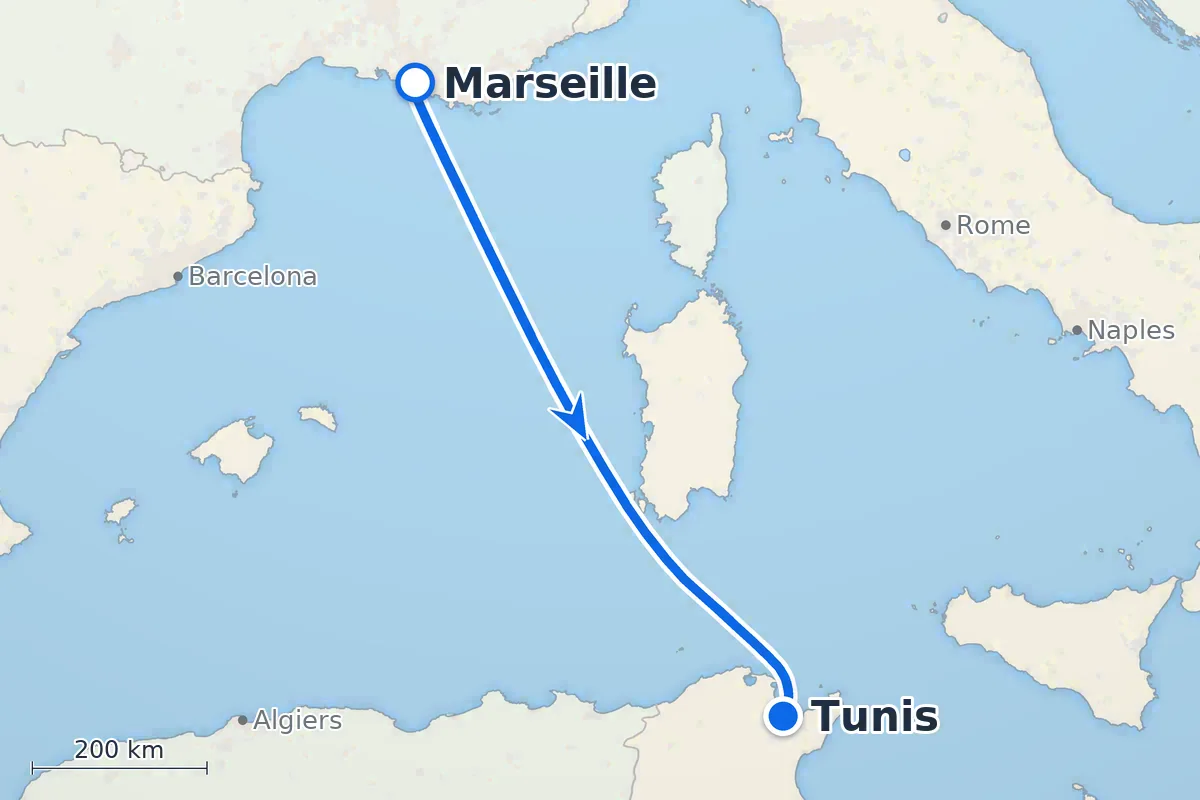
Travelling with a dog
Taking a dog to Tunisia
How your dog travels on the ferry to Tunisia - and comes back again: titre test, documents and accommodation on board.
- Important: without a rabies titre test, your dog cannot return to the EU
- Outward journey with EU pet passport, microchip, rabies vaccination and health certificate
- On board in a pet cabin or the on-board kennel depending on operator, vehicle deck closed
The routes to Tunisia with a dog
Your dog can travel on every connection to Tunis - in a pet cabin or the on-board kennel depending on the operator. Choose your route and register your pet when you book.
Prices per person, one way


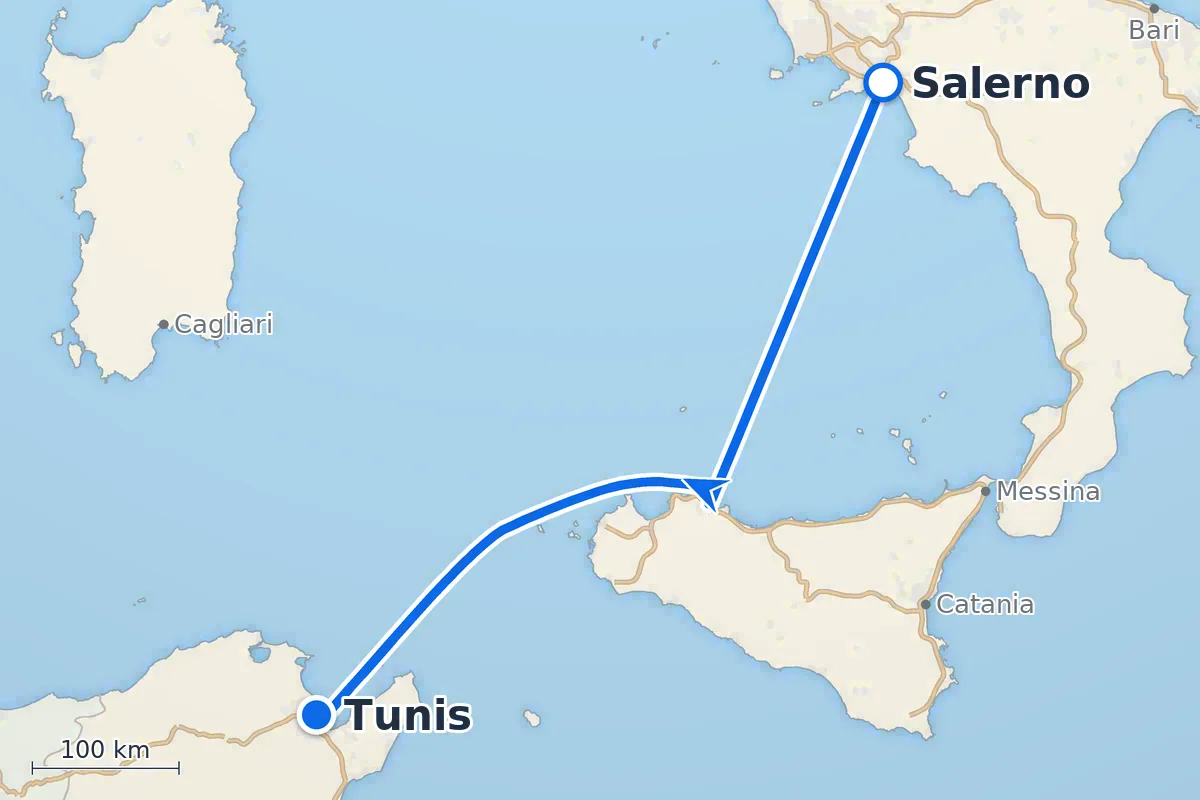

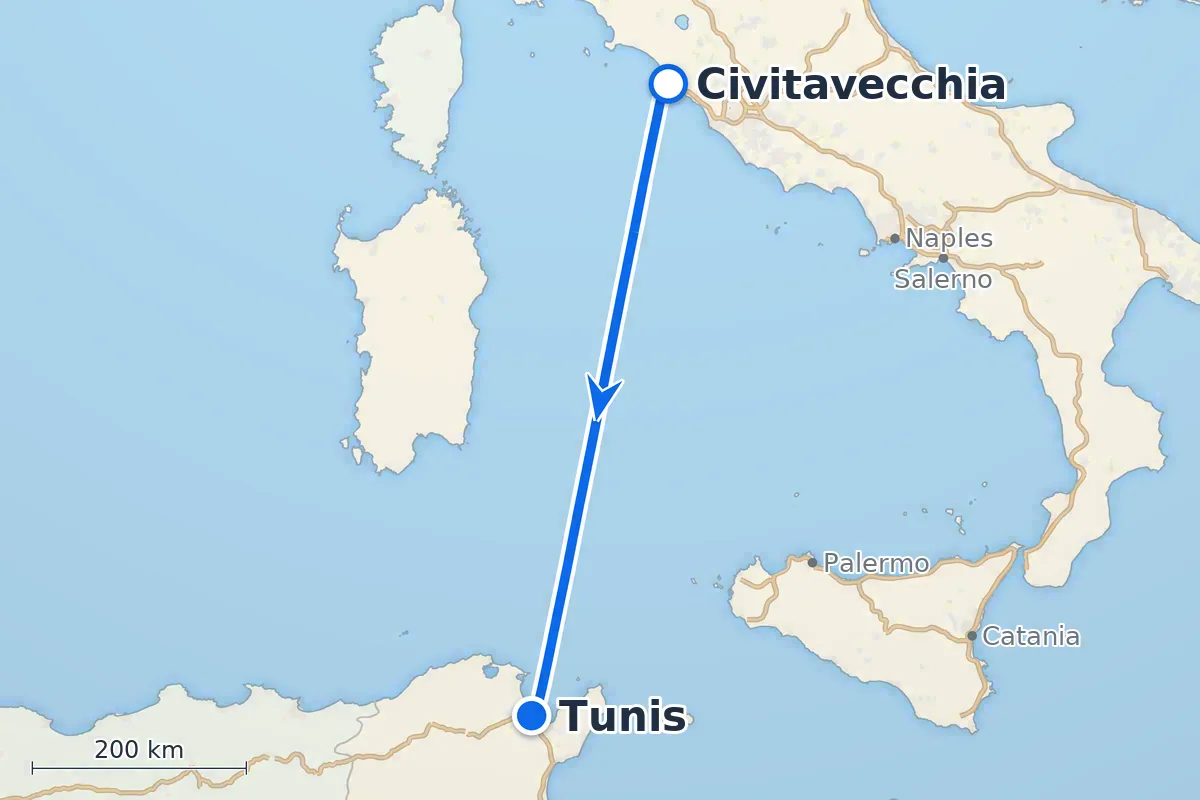

© OpenStreetMap contributors
Entry & return journey
What your dog needs for Tunisia
Tunisia is a non-EU country with no listed rabies status. The real bottleneck isn't the outward journey but the return journey to the EU.
EU pet passport
Mandatory document with microchip number and recorded rabies vaccination. For Tunisia, an official health certificate is usually also required.
ISO microchip
ISO standard 11784/11785 (15 digits). Must be implanted before the rabies vaccination.
Rabies vaccination
Valid rabies vaccination, recorded in the pet passport. Basis for the titre test.
Titre test
Crucial for the return journey! Rabies blood test, blood sample taken no earlier than 30 days after vaccination. Best done before leaving the EU.
Table of Contents
Taking a dog to Tunisia is very doable, but it needs more preparation than a trip within the EU. Tunisia is a non-EU country with no listed rabies status. For the outward journey you need the usual documents; the real bottleneck is the return journey to the EU: without a rabies titre test done in good time, your dog can't come back. On this page you'll find the rules for the outward and return journey, how your pet travels on board, and what to watch out for in each operator's on-board rules. If you're travelling by camper, vehicle dimensions and customs come into it too - all covered in the guide Taking a motorhome to Tunisia.
The return journey is what really matters
The most important step is preparing the return journey to the EU. Because Tunisia isn't listed as rabies-free, the EU requires a rabies antibody test (titre test):
- The blood sample may be taken no earlier than 30 days after the rabies vaccination.
- It must be taken by an authorised vet and analysed at an EU-approved laboratory.
- If the test is only done in Tunisia, a three-month waiting period applies before re-entry.
Entering Tunisia
The requirements for the outward journey are manageable:
- EU pet passport with the chip recorded and a valid rabies vaccination.
- ISO microchip (standard 11784/11785), implanted before the rabies vaccination.
- Valid rabies vaccination, recorded in the pet passport.
- Official health certificate, usually required for entry to Tunisia.
As requirements can change, check them before departure with the Tunisian consulate or the relevant veterinary authority. For re-entry to the EU, a maximum of five animals may be brought in, and you must confirm in writing that the trip isn't for sale or change of ownership.
Where your dog travels on board
How your dog is accommodated varies considerably by operator:
- Grimaldi Lines: your dog may go on the outside decks on a lead and muzzled. A paid pet cabin service is available; otherwise the animal travels in the kennel. Pets are not allowed in restaurants, lounges or indoor areas.
- Corsica Linea: pets travel exclusively in the secured, ventilated on-board kennel with access to water and, for hygiene reasons, may not move freely around the ship, even on a lead. The kennel is opened shortly before arrival. Guide and assistance dogs may travel in the cabin free of charge.
- GNV and CTN: pet cabins or kennels depending on the ship; a lead and usually a muzzle are required for boarding, and the operator requires proof of valid vaccination.
On all ferries the vehicle deck is closed during the crossing, so your dog doesn't stay in the car. The number of pet cabins is limited, so register your pet at the time of booking, not just at the port. Bring food, water, a lead, a muzzle and poo bags.
Which route is best with a dog?
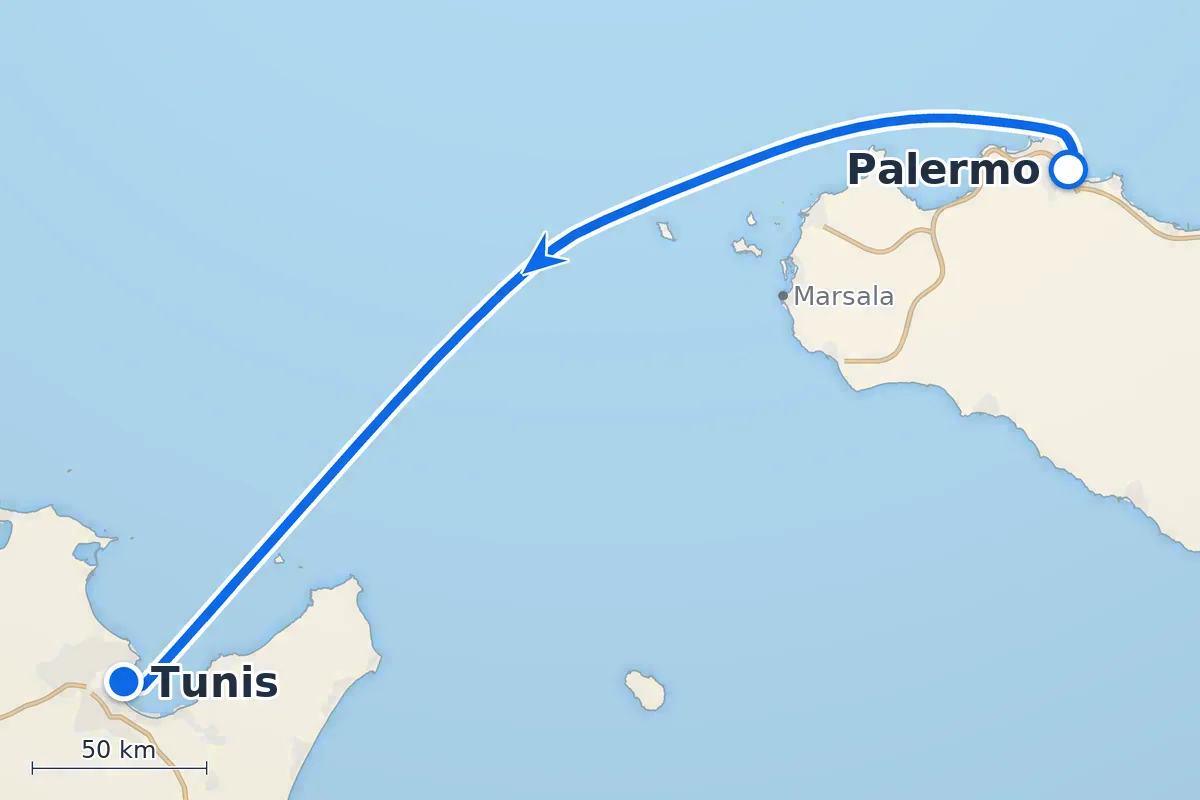
For your dog, time on board matters most. The shortest crossing is from Sicily with Palermo - Tunis, around ten hours. The connections from mainland Italy and from France - Genoa, Civitavecchia, Salerno and Marseille - take around a day; on these your dog spends a night in the kennel or, where possible, a pet cabin.
Checklist for travelling with a dog
- Have the titre test done in good time before departure in the EU and recorded in the pet passport.
- EU pet passport, microchip and rabies vaccination complete and valid.
- Health certificate for entry to Tunisia, with a current date.
- Ferry booking with your dog registered and, where needed, a reserved pet cabin or kennel space.
- Plan a toilet break before departure and keep your documents ready at check-in.
Frequently asked questions
FAQ - Taking a Dog to Tunisia
The key questions about travelling with a dog to Tunisia, answered concisely.
What do I need to know about the return journey with a dog from Tunisia to the EU? +
This is the most important point. Tunisia is a non-EU country with no listed rabies status, so the EU requires a rabies antibody test (titre test) for re-entry. The blood sample must be taken no earlier than 30 days after the rabies vaccination and analysed at an EU-approved laboratory. Here's the key trick: if you have the test done in the EU before departure and your vet enters the result in the pet passport, the usual three-month waiting period before the return journey no longer applies. Without a valid titre test, your dog cannot come back.
What documents does my dog need to enter Tunisia? +
For the outward journey you need an EU pet passport, an ISO microchip and a valid rabies vaccination. Tunisia usually also requires an official health certificate. As requirements can change, check them before departure with the Tunisian consulate or the relevant veterinary authority.
Where is my dog accommodated during the crossing? +
This depends on the operator. With Grimaldi Lines, your dog can go on the outside decks on a lead and muzzled; a paid pet cabin service is available, otherwise the animal travels in the kennel; pets are not allowed in restaurants or indoor areas. With Corsica Linea, pets travel exclusively in the secured, ventilated on-board kennel and may not move freely around the ship. GNV and CTN offer pet cabins or kennels depending on the ship. Register your pet at the time of booking.
Are there dog breeds that aren't allowed on the ferry to Tunisia? +
Yes. Under a rule from the Tunisian Ministry of Transport, carriage of certain dog breeds on the Tunisia routes is prohibited, including Pit Bull, Rottweiler, Tosa, Mastiff and Boerboel. If this rule isn't observed, the operator will refuse to load the animal. Check before booking whether your dog is affected.
Does my dog travel in the motorhome? +
On the ferries, the vehicle deck is closed during the crossing, so your dog doesn't stay in the motorhome but travels in a pet cabin or the on-board kennel. Everything on vehicle dimensions, customs and insurance is in the guide Taking a motorhome to Tunisia.
Ready for your trip with a dog to Tunisia?
Check the routes, plan the titre test in good time, and register your dog when you book.